
Which of These 4 Business Structures is Right for You? Best Way to Incorporate Your Business Today!
Introduction
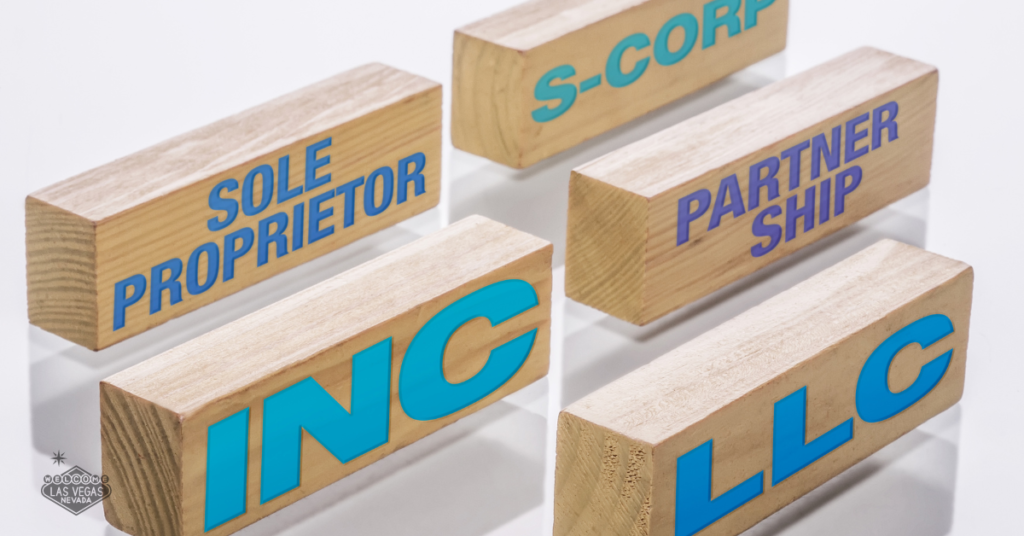
Choosing the proper business structure is one of the most critical business decisions. Choosing the right business structures impacts everything from daily operations to taxes and personal liability. This blog post will explore the basics of different business entities, including Limited Liability Companies (LLCs), S Corporations, C Corporations, and Sole Proprietorships. We’ll also provide real-world examples to help illustrate the best fit for various types of businesses. By understanding the pros and cons of each structure, you can make an informed decision that aligns with your entrepreneurial goals.
Why Incorporating is Beneficial
Incorporating your business provides numerous benefits that can help protect your assets, improve your credibility, and offer potential tax advantages. Limited liability protection is one of the most compelling reasons to incorporate, as it ensures that your assets are generally shielded from business debts and legal actions. Additionally, incorporating can enhance your professional image, making it easier to attract investors and secure financing. The incorporation process also forces you to structure your business formally, which can streamline operations and improve overall efficiency.
Examples of Businesses That Benefit from Incorporation
Different industries and business types can benefit from incorporation in various ways. For instance, a tech startup might choose to become a C Corporation to attract venture capital and offer stock options to employees. A small retail business might opt for an LLC to enjoy limited liability protection with fewer administrative requirements. Freelancers and consultants might find that forming an S Corporation offers the right balance of liability protection and tax benefits. Let’s dive deeper into these entities and explore their specific advantages and disadvantages.
| Benefit | Example Business Type | Description |
|---|---|---|
| Limited Liability Protection | Tech Startup | Corporations exist even if the owner leaves or sells the business (C Corp). |
| Pass-through Taxation | Freelance Graphic Designer | Profits and losses pass through to personal tax returns, avoiding double taxation (LLC, S Corp). |
| Attracting Venture Capital | Software Development Company | C Corps can issue stock to attract venture capital investment. |
| Stock Options for Employees | Tech Startup | C Corps can offer stock options to employees, which can be a significant incentive. |
| Flexible Management Structure | Real Estate Investment Company | LLCs offer flexible management options, either member-managed or manager-managed. |
| Write-offs for Travel Expenses | Consulting Firm | Businesses can deduct travel expenses related to business activities (C Corp, S Corp, LLC). |
| Tax Deductions for Health Insurance | Medical Practice | S Corps can provide tax deductions for health insurance premiums for owner-employees. |
| Retirement Plan Options | Financial Advisory Firm | C Corps can offer various retirement plans to employees, providing tax advantages. |
| Ability to Raise Capital | Restaurant Chain | C Corps can issue different classes of stock to raise significant capital. |
| Professional Image and Credibility | Digital Marketing Agency | Incorporating can enhance a business’s professional image, making it more credible to clients. |
| Perpetual Existence | E-commerce Business | Businesses can deduct startup costs in the first year (LLC, C Corp, S Corp). |
| Deduction of Startup Costs | Online Retailer (eBay) | LLCs and corporations protect owners’ assets from business liabilities. |
| Liability Protection for Owners | Local Coffee Shop | C Corps can provide fringe benefits like company cars and health insurance. |
| Tax Flexibility | Dropshipping Business | LLCs offer tax flexibility, allowing members to choose how they are taxed. |
| Fringe Benefits for Employees | Film Production Company | Incorporation can help protect brands and manage intellectual property. |
| Ease of Transfer of Ownership | Real Estate Holding Company | Shares in a corporation can be easily transferred to new owners (C Corp). |
| Reduction of Self-employment Taxes | Freelance Writer | S Corps can reduce self-employment taxes by paying the owner a reasonable salary. |
| Professional Separation | Medical Practice | Incorporating separates personal and professional assets and liabilities. |
| Brand Protection | Tech Startup | Incorporation can help in brand protection and intellectual property management. |
| More Structured Operations | Restaurant Chain | Corporations require formalities like regular meetings and records, leading to structured operations. |
These benefits demonstrate how different business structures can provide various advantages depending on the specific needs and goals of the business. Whether through tax benefits, liability protection, or the ability to raise capital, choosing the proper business structure can significantly impact the success and sustainability of your business.

Types of Business Structures: Choosing the Right One for Your Company
Limited Liability Company (LLC)
A Limited Liability Company (LLC) combines elements of corporations and partnerships, offering flexibility and limited liability protection. Here are the key characteristics and benefits of an LLC:
Key Characteristics:
- Liability Protection: LLCs provide limited liability protection, meaning that the owner’s assets are generally protected from the business’s liabilities.
- Flexible Management: LLCs offer flexibility in management. Owners, known as members, can choose between member-managed (where all members are involved in decision-making) or manager-managed (where appointed managers handle operations).
- Pass-through Taxation: LLCs are typically not taxed at the entity level. Instead, profits and losses “pass-through” to the members’ tax returns, avoiding double taxation.
Pros of LLCs:
- Limited liability protection shields personal assets.
- Flexibility in management and ownership structures.
- Pass-through taxation avoids double taxation.
- Fewer formalities and record-keeping requirements compared to corporations.
Cons of LLCs:
- Limited ability to raise capital through stock issuance.
- Potential self-employment tax obligations for members actively involved in the business.
- Varying state laws and regulations for LLCs.
Examples of LLCs:
- Freelance Graphic Designer: An LLC offers limited liability protection and pass-through taxation, making it ideal for small, owner-operated businesses like freelance graphic design.
- Local Coffee Shop: An LLC is simple to set up and manage. It offers liability protection without the complexities of a corporation, perfect for small local businesses.
- Real Estate Investment Company: An LLC offers flexibility in profit distribution and liability protection, which is crucial for real estate investments and property management.
Call to Action:
If you’re considering starting a business and want liability protection and tax flexibility benefits, consider forming an LLC today!
S Corporation (S Corp)
An S Corporation is a special tax designation that offers the benefits of limited liability protection while avoiding double taxation. Here are the key characteristics and benefits of an S Corp:
Key Characteristics:
- Limited Number of Shareholders: S Corps are limited to 100 shareholders, all of whom must be U.S. citizens or residents.
- Pass-through Taxation: S Corps enjoy pass-through taxation, meaning profits and losses flow to shareholders’ tax returns.
- Single Class of Stock: S Corps can only issue one class of stock, which can simplify operations but may limit flexibility.
Pros of S Corporations:
- Limited liability protection for shareholders.
- Pass-through taxation avoids double taxation.
- More straightforward formation and ongoing compliance compared to C Corporations.
Cons of S Corporations:
- Eligibility requirements may restrict ownership options.
A limited number of shareholders can hinder future growth. - Stricter ownership and operational restrictions compared to LLCs.
Examples of S Corps:
- Professional Consulting Firm: An S Corp offers pass-through taxation and limited liability, suitable for consulting firms with a moderate number of shareholders looking to avoid double taxation.
- Medical Practice: An S Corp allows for pass-through taxation and can benefit medical practices with several doctors as shareholders, providing tax benefits and liability protection.
- Digital Marketing Agency: An S corporation provides liability protection and pass-through taxation, making it ideal for small—to mid-sized marketing agencies.

C Corporation (C Corp)
A C Corporation is a separate legal entity from its owners, providing strong liability protection and the ability to raise capital through stock issuance. Here are the key characteristics and benefits of a C Corp:
Key Characteristics:
- Unlimited Shareholders: C Corps can have unlimited shareholders, making them suitable for large businesses looking to attract substantial investment.
- Various Classes of Stock: C Corps can issue different classes of stock, allowing for greater flexibility in financing.
- Potential for Double Taxation: C Corps may face double taxation, where the corporation pays taxes on profits, and shareholders pay taxes on dividends.
Pros of C Corporations:
- Strong potential for raising capital through stock issuance.
- Ability to offer various classes of stock.
- Potential for tax deductions and fringe benefits for employees.
Cons of C Corporations:
- Complex formation and ongoing compliance requirements.
- Double taxation on profits is distributed as dividends.
- More formalities, such as holding shareholder meetings and maintaining corporate records.
Examples of C Corps:
- Tech Startup: C Corps can issue various classes of stock, attract venture capital, and provide stock options to employees, which is essential for fast-growing tech startups.
- Restaurant Chain: A C Corp is suitable for a restaurant chain because it can attract substantial investment, offer shares, and provide limited liability to shareholders.
Film Production Company:** A C Corp can handle large-scale investments, attract multiple investors, and offer different classes of stock, which is essential for big-budget film productions.
Sole Proprietorship
A Sole Proprietorship is the simplest business structure, where the business and the owner are legally the same entity. Here are the key characteristics and benefits of a Sole Proprietorship:
Key Characteristics:
- Simplicity: Sole Proprietorships are easy to set up and have minimal regulatory requirements.
- Total Control: The owner completely controls the business and its operations.
- Unlimited Liability: The owner is liable for all business debts and legal actions.
Pros of Sole Proprietorships:
- Simple to set up and manage.
- Complete control over business decisions.
- Minimal regulatory requirements.
Cons of Sole Proprietorships:
- Unlimited personal liability for business debts and obligations.
- Limited ability to raise capital.
- Business continuity depends entirely on the owner.
Examples of Sole Proprietorships:
- Freelance Writer: Sole Proprietorships are ideal for freelancers and independent contractors who want to maintain complete control and simplicity in their business operations.
- Home-Based Bakery: A Sole Proprietorship suits small, home-based businesses with minimal risk and straightforward operations.
- Handyman Services: Individuals offering local handyperson services can benefit from the simplicity and complete control of a Sole Proprietorship.
START YOUR BUSINESS TODAY

Steps to Incorporate Your Business
Incorporating your business involves several key steps. Here’s a brief overview:
- Choose a Business Structure: Decide whether an LLC, S-corporation, C-corporation, or Sole Proprietorship best suits your business.
- Select a Business Name: Choose a unique name that complies with your state’s naming rules.
- Register Your Business: File the necessary documents with your state’s business filing office. For example, file Articles of Organization for an LLC or Articles of Incorporation for a corporation.
- Obtain an Employer Identification Number (EIN): Apply for an EIN from the IRS, which you’ll need for tax purposes.
- Create an Operating Agreement or Bylaws: Draft an operating agreement for an LLC or bylaws for a corporation to outline the management structure and operating procedures.
- Obtain Licenses and Permits: You may need specific licenses and permits to operate legally depending on your industry and location.
- Comply with Ongoing Requirements: Stay compliant with state and federal regulations by filing annual reports, paying necessary fees, and maintaining good standing.
For a complete guide on incorporating your business, visit this detailed resource.
Companies and Their Suitable Corporate Structures
| Company/Business Type | Corporate Structure | Reasoning |
|---|---|---|
| Tech Startup (e.g., Software Development) | C Corporation | C Corps can issue various classes of stock, attract venture capital, and provide stock options to employees, which is essential for fast-growing tech startups. |
| Freelance Graphic Designer | LLC | An LLC offers limited liability protection and pass-through taxation, making it ideal for small, owner-operated businesses like freelance graphic design. |
| Restaurant Chain | C Corporation | An LLC is simple to set up and manage. It offers liability protection without the complexities of a corporation, perfect for small local businesses. |
| Local Coffee Shop | LLC | A C Corp can handle large-scale investments, attract multiple investors, and offer different classes of stock, which is essential for big-budget film productions. |
| Professional Consulting Firm | S Corporation | LLCs provide flexibility, limited liability, and simpler administrative requirements, ideal for online retail businesses. |
| E-commerce Business | LLC | An LLC provides liability protection and pass-through taxation, which benefits dropshipping businesses. |
| Real Estate Investment Company | LLC | An S Corp allows for pass-through taxation and can benefit medical practices with several doctors as shareholders, providing tax benefits and liability protection. |
| Film Production Company | C Corporation | An LLC offers flexibility in profit distribution and liability protection, which is crucial for real estate investments and property management. |
| Medical Practice | S Corporation | It is ideal for freelancers and independent contractors who want to maintain complete control and simplicity in their business operations. |
| Digital Marketing Agency | LLC | An LLC provides liability protection and flexibility in management, making it ideal for small to mid-sized marketing agencies. |
| Online Seller (eBay) | LLC | An LLC offers liability protection and simple management, making it ideal for individuals selling products on eBay. |
| Dropshipping Business | LLC | Ideal for freelancers and independent contractors who want to maintain complete control and simplicity in their business operations. |
| Home-Based Bakery | Sole Proprietorship | Suitable for small, home-based businesses with minimal risk and straightforward operations. |
| Freelance Writer | Sole Proprietorship | Suitable for individuals offering local handyman services, providing simplicity and total control. |
| Handyman Services | Sole Proprietorship | It is ideal for freelancers and independent contractors who want to maintain complete control and simplicity in their business operations. |

Conclusion
Choosing the proper business structure is critical in starting and growing your business. Whether you opt for an LLC, S Corporation, C Corporation, or Sole Proprietorship, each structure has unique advantages and challenges. By understanding the basics and considering real-world examples, you can make an informed decision that best suits your business goals and needs. Consulting with legal and tax professionals ensures your chosen structure aligns with your long-term vision and operational requirements.
Incorporating your business provides numerous benefits, including liability protection, tax advantages, and improved credibility. By taking the time to research and choose the proper structure, you set the foundation for a successful and sustainable business. For more information and resources on incorporating your business, visit websites like the Small Business Administration (SBA) or consult a legal professional. Make the right choice today and watch your business thrive!
Resources and References
When deciding on the proper business structure and incorporating your business, utilizing reliable resources and consulting professionals is essential. Here are some valuable resources and references to help you get started:
Resources:
- U.S. Small Business Administration (SBA)
- Website: sba. gov
- Description: The SBA provides comprehensive guides and resources for small businesses, including information on choosing the proper business structure, legal requirements, and tax obligations.
- Internal Revenue Service (IRS)
- Website: irs. gov
- Description: The IRS offers detailed information on the tax implications of different business structures, including LLCs, S Corps, and C Corps, and provides necessary forms and guidelines.
- Nolo
- Website: nolo. com
- Description: Nolo is a leading provider of legal information for individuals and small businesses. Their website includes articles, books, and online services related to business formation and incorporation.
- LegalZoom
- Website: legalzoom. com
- Description: LegalZoom offers online legal services for business formation, including LLCs, corporations, and more. They provide step-by-step guidance and professional assistance.
- SCORE
- Website: score. org
- Description: SCORE is a nonprofit organization that provides free business mentoring and educational workshops. They offer resources on business planning, structure, and legal requirements.
- National Association of Secretaries of State (NASS)
- Website: nass. org
- Description: NASS provides a directory of state-specific business filing offices. This resource helps find information on state regulations and requirements for business incorporation.
- Rocket Lawyer
- Website: rocketlawyer. com
- Description: Rocket Lawyer offers affordable legal services and advice, including business formation and incorporation. They also provide legal document templates and consultations with attorneys.
- BizFilings
- Website: bizfilings. com
- Description: BizFilings offers incorporation services, helping businesses file the necessary documents to form an LLC, corporation, or nonprofit. They also provide ongoing compliance services.
- Clerky
- Website: clerky. com
- Description: Clerky specializes in startup legal paperwork, including incorporation, equity management, and other essential legal documents for growing businesses.
- FindLaw
- Website: findlaw. com
- Description: FindLaw offers a wealth of legal information and resources, including articles and guides on business formation, incorporation, and choosing the right business structure.
References:
- “Choosing a Business Structure.” U.S. Small Business Administration (SBA), sba.gov.
- “Business Structures.” Internal Revenue Service (IRS), irs.gov.
- Fishman, Stephen. “LLC vs. Corporation: How to Choose the Right Form for Your Business.” Nolo, nolo.com.
- “Starting Your Business.” LegalZoom, legalzoom.com.
- “Business Entity Types.” SCORE, score.org.


